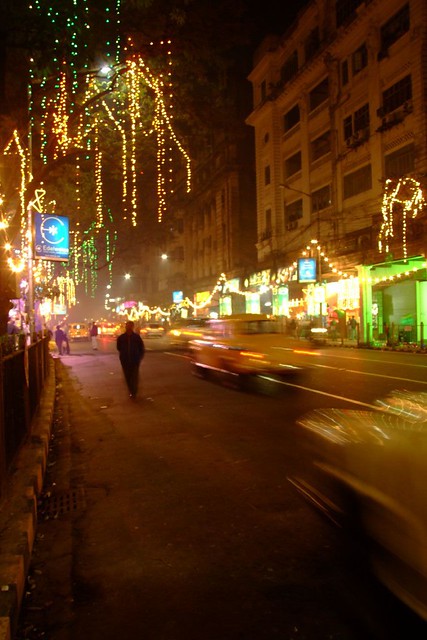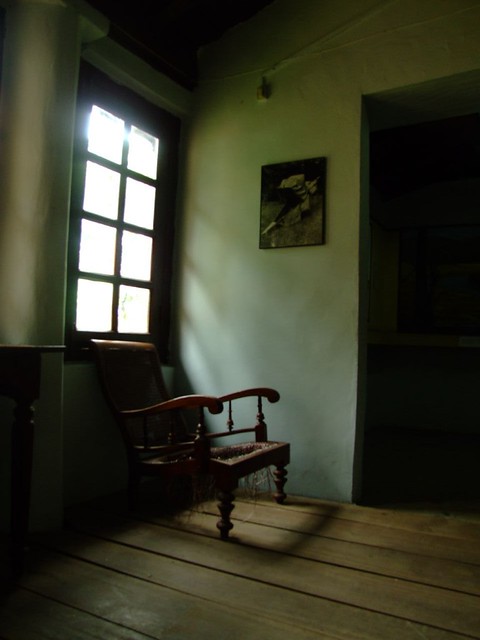
Perfume and remembering


Some smells stay with you. My grandfather used to shave using a sort of arcane Godrej soap called shaving rounds. It had a lemony disinfectant smell that lingered on him through the day, mixed with the scent of fresh earth. I could smell it in his white cotton vest while going to bed, lulled by stories of ghosts and princesses in faraway lands. My father, a savvy man for his time, used Old Spice—he still does. This was the aftershave that came in milky white glass bottles. The white layer flaked off if you scratched it, revealing the heady, colourless fluid inside. 

My mother's hands had a faint smell of ginger and ground spices, thanks to her years spent in the kitchen. Her nails tinged with yellow. The warm hue showed through when she dressed them up in a thin coat of nail varnish. Family outings, or someone's wedding, meant dressing up. I parted my oil-slicked hair and polished my glasses. From my mother's pink tin, I dusted myself with light, flowery talcum powder, reserving a pinch for my face. My father, in full-sleeved shirts, helped himself to a tiny spray of English Leather, which he kept locked in his cupboard. The small glass bottle was a coveted grey market purchase. He had special fondness for it. Those evenings, my father exuded smoked leather and oakmoss, a man-smell that lingered on his shirt for days.

Keo Karpin, a sweet-tinged, dark green hair oil, was primary among the smells in my grandmother's room. Her grey-silvered hair curled at the ends. Through warm afternoons, I uncapped the emerald hued bottle and inhaled long, invisible swirls. These expeditions to borrow the precious bottle were secret. I was scared of the strict matriarch, whose siesta could break by a single careless movement in the room. Our house in the village was heavy with the smells of musty twigs and fishnets drying in the sun. Some afternoons, when the weather changed, I would run to the terrace before the clothes got folded from the clothesline. I cocooned myself in the drapes and breathed in the soft, fading aroma of the setting sun. I still do.

Back in the city, after school, I would take a detour through the neighbourhood and stand near the small shop that repaired ancient refrigerators. The paint gun sprayed a fine, magical blue-grey mist. The sticky-sweet smell of raw paint over the strange, gnarly machines was addictive, like some strange, striped candy. It was magic.  

At my father's flat at the edge of town in Calcutta, a dozen sparkling hasnuhana trees line the walkway. Gloomy autumns were when mosquitoes multiplied everywhere. The occasional waft of the hasnuhana lit up adolescent evenings at the study table. In college, I saved up money to buy a can of Axe spray. When we sneaked out on some nights, the synthetic, sticky smell morphed into blurred memories of first outings at the Olympia bar, mingled with smoke and desperation. To look cool, to fit in, to grow up.

It has been some years since I've left home. A whole new world of scents opened up. I discovered ittars and saved up to buy long-coveted perfumes, names I would linger over in secondhand magazines. Azzarro. English Lavender. Green Irish Tweed. But one of the smells I miss the most is that of the old, English Leather-stained shirts. The last time I went back, the small, square bottle was still stowed aside with care in the cupboard. My father does not like throwing away things. The bottle was empty, a brown residue stained the bottom, smelling of oakmoss and aged leather.

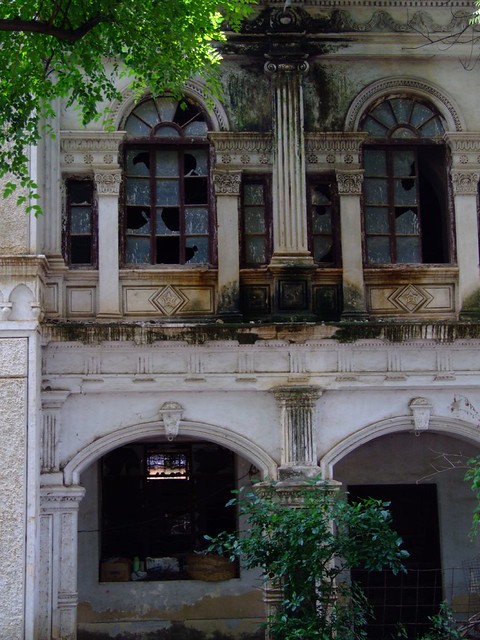
A gut feeling

My earliest memory of food is in Cafe di Monico. Nestled in the old corporate switchboard of Calcutta—Chowringhee, it was one of those crumbling dark-wood establishments my father loved from his first years as a budding public servant in the area. I must have been four when I first went there. The tables had wobbly legs supported by cardboard chips torn off from matchboxes, and blue enameled tin ashtrays on the centre. Their specialities were mutton cutlets and Hakka-style Chinese. I had my first proper eating out experience: fried rice and sweet sour chicken there. The gravy in the chicken was red, almost taking on an unearthly neon hue, which I thought was incredible. Red chicken! We finished with fizzy Campa Cola, served in thick bottomed glass tumblers, the sort that have a greenish ferrous tint when you look at them sideways. Cafe di Monico was dimly lit in amber light, with ancient fans hung from spidery beams on the high ceiling. The waiters always dressed in white. I was growing up in a small town in central Bengal, and these first brushes with the big city were the best part of summer vacations.

When we moved to Calcutta in 1990, I was lucky to have been able to shuttle between my grandfather's house in a suburban village and my mother's family home in Calcutta—College Street. The University neighbourhood at College Street holds in its belly one of the biggest secret food hubs of the city, and I was growing up in it. Every morning, I walked down till Sealdah in my white school shorts to catch the school bus. Breakfasts often meant sweet Bapuji tiffin cake and milk. At four in the afternoon, when I made my way back under the watchful eye of my mother, the smell of crumb-fried fish chops frying at the Amherst Street intersection took over the air. My cousin, older by five years, once sneaked in two of these small, cylindrical morsels. We hid away to the rickety, asbestos-lined terrace. We downed the chops in silence, secret glee in our eyes and smell of mustard in our hands. Ashen clouds broke in soft, watery pats on the asbestos.


The house in College Street was always jingle-jangle in the mornings with the sounds of pigeons, neighbours brushing their teeth, and the stylised call of street vendors, "Kabaaaadeeeee!" My grandmother kept a set of iron keys at the end of her white saree, which clinked every morning when I headed to school. Growing weaker every year, she appeared at the soot-lined kitchen on rare days. She chopped vegetables with patience and could carve the thinnest potato slices, which she served crisp-fried with sweetened dal and rice. I do not know of anyone who can ever get that balance of panch-phoron right.

At the village house, we would pick sharp, unripe guavas from the tree. Stealing a sliver of salt from the kitchen was difficult but we managed just fine, rubbing coarse, pink salt grains on the guavas on muggy summer days. My father's mother, Amma, made sun-dried pickles, mango, lemon, and tamarind. The dark, spiced fruit would be heaped on the oxide-red cement beside the pond. Though we were supposed to be snoozing inside, we stole out into the hot sun and always returned with a handful of tamarind, spitting out the seeds as we wolfed down on the uncured pickle.

Before summer vacations in school, an old man with glassy eyes stood in a shade every afternoon at the Short Street crossing. He sold spiced jujube fruit in tiny paper bags, dusted with black salt and chilly. They had a sulphur tang and turned your mouth red. Not allowed pocket money, I scraped under the mattresses for loose change. If I ever got lucky, two Rupees got you a handful of the forbidden stuff from the old man. On lucky days, you could spot a wiry young man sitting beside a dirt-lined thermocol box, selling "kathi pepsi"—esoteric ice lollies trapped in a thin plastic sheath for a rupee each. I didn't care for my frequent tonsilitis, and occasionally returned home with a bright orange dribble mark on my shirt pocket, Best guilty pleasures ever. On days when I had fever, my mother made bone stew, slowly cooking goat shanks in a broth. I would refuse to eat rice, stubbornly mouthing down hot spoonfuls of the stuff down my bilious, bitter throat. It's the best memory I have of sickness and school.

When I was 17 and had enough money of my own, I walked the 800-yard mark to Park Circus on a cold January evening and rode a bus till Chowringhee. The sun had set long ago, and a non-committal mist was pushing from the greens on to the halogen-lined footpath. It had been a little over ten years that Cafe di Monico downed its shutters, and the guava tree in the village house was long gone. I walked the stretch across brick-red Georgian porticos perpetually plastered with revolutionary slogans, dodging pushcarts and pullover sellers. I called my mother from a phone booth, and told her I'll be late for dinner. When I knew I was out of plain sight, I trudged to a quiet corner away from Dalhousie, and lit a cigarette.


Feelgood Inc.


A few evenings ago, I saw the admirably slick and feelgood Zindagi Na Mile Dobaara, which translates roughly to "You live only once". As for those of you familiar with the Internet, that's YOLO—seize the moment—Carpe Diem. No surprises that like the bulk of mainstream Indian films, ZNMD is unabashedly larger than life, showing off lead characters with impossibly chiseled bodies who are off to a road trip through Spain. Through the course of the film, ZNMD shows us how each of these entitled male characters undergo cathartic changes in their outlook, and learn to exercise choice in their lives. 

Word of warning, I will simplify things, considering my myopic, urban-heavy point of view. Keeping that in mind, the modern iteration of Carpe Diem as in ZNMD can still be read as a telling comment on our times. 

Coming as it does from a long-established tradition of showing lives less ordinary, big-budget Bollywood is most at ease when it shows actors playing out middle class fantasies of wealth and happiness, more often than not in faraway places. Watching films has always been our method of forgetting daily worries for a few precious hours. Its something we love to lap up by the mouthful.

While fantastical escapist narratives have been part of the Indian cinematic medium, inadvertently drawing from its roots as a means to escape the banality of everyday existence—urban, "new age" films such as ZNMD push the envelope a few steps further. I've often asked myself if there is something essentially wrong with this kind of disconnected, at times almost vulgar, extreme escape fantasy. For an average Indian whose lives we cannot even begin to fathom sitting in our city flats, this is a story that would at best become a cruel reflection of the choices they are not allowed in life.

---

Thanks to a childhood spent in suburbs and villages in southern Bengal, I remember the crowd of fifty-odd people who would crouch around our family's old Nelco television for the Sunday feature film. This was the late 1980s. I remember the wide-eyed look of reverence when Amitabh Bachchan spars an angry exchange of words with a villainous Prem Chopra, who, of course, holds a rifle in a gaudy sweeping staircase-laden palace. As the film ended, the crowd would thin out, spades, fishing nets, beedis, and other things were collected, gamchchas tied back to the waist—back to work for everyone.

What was the gaudy sweeping staircase-laden palace settings from the seventies is now a posh studio apartment in Neo-Bollywood's New York and London. The details change, and the scope of the fantastical expands from an old-money palace to the skyline of Manhattan.

On a more recent visit to the palm-cradled village house, some things have changed—others remain somewhat the same. There are more televisions around the neighborhood, and some homes now have cable access—via overhead wires straddled to coconut trees. While postcards of Salman Khan are the mainstay of any self-respecting men's barbershop decor. 

When there is time to rest, people tired from fishing, getting fleeced by landowners, and irrigating paddy fields crowd around their neighbors' televisions for a precious glimpse of SRK dancing in faraway places on the television frame.

---

It's easy to dismiss big-budget Indian films merely as fantasies pandering to urban upper middle aspirations, and yet they are so much more than that. The Karan Johar brand of films in foreign shores to my mind, is a comment about its intended audience, rather than the perceived insensitivity of the filmmakers. Films, much like ZNMD, point at a larger picture of an India that is gradually losing visibility, and perhaps relevance, in the story of our lives. Middle Indians populating its cities and larger towns are increasingly hungry to break with its past, and add to the mall crowds on weekends. GIven a choice, we would probably say that there are no poor in this country.

We have known a whole generation of parents only too eager to sever ties with memories of their struggles while growing up, and make sure that their kids would never face the challenges that beset the older lot. As a result, we've grown into an entitled generation of children in adult bodies, having learned to dig our fists in a KFC bucket and forget that there is an abysmally poor country lying just beyond the guarded walls of the mall.

We are the ones lucky enough to have hard-working parents who escaped the invisibility of lower India. And now we want to reach out and take the skies. Endemic to a considerable cross-section of middle India, this aspiration has, on the upside, bred workers who want to desperately rise in life, pushing ever longer hours, and often taking more than one job to build funds, get that first car, invest in a bit of real estate. This hunger to escape invisibility has mobilized the bulk of young middle-India, who too want to flaunt chiseled physiques and romance flawless lasses in Spain, à la ZNMD. The darker side to this aspiration, as seen in the movies, emphasizes a greater reinforcement of upper-middle dreams. The stories told by big-budget Indian cinema, such as ZNMD, go beyond their scope as fluffy depictions of people with choices. It points at the mind of its popcorn-greased viewers, hinting at their abhorrence of the mundane and the ordinary.

This leaves us relishing the irony of mainstream Indian cinema—in its refusal to acknowledge that overwhelming majority of the country that is perpetually in the sidelines, left out of the growth story—at best clawing at the lower rungs of the service sector in towns and cities. In your urban, tightly netted existence, you'll probably have brief, uncomfortable encounters with this part of India servicing your car, manning your lift, or smiling vacantly at you from behind the KFC counter. But who's telling their stories? And even if their stories are told, who cares?

---

Also, check out Smita Dakhore's take on the disappearing poor in mainstream Indian cinema. Read it here.

The Art of Making


The best thing in life is... Oh heck. I'd probably risk tumbling down in a heap of cliches. How does one pinpoint what the best thing in life is? Very broadly though, among the best things that life yields through your daily comings-and-goings, are quite simply, things you make. This could be a great, glowing memory that you can invoke when nothing else seems worth hanging on to. It could be places you have been to, or the people you meet, or even the relationships you have with the people you meet. It could be a little garden patch, much like my mother's little potted plants, that you raise with your labour. Often, the best things there ever is, are the things you find, nourish, and create. Its a deceptively simple realisation that puts you in the controls of your own spaceship.

Most people with a thinking head are known to crave agency. Like it or not, you want to be centre-stage in the whirling, transient, and often mundane, drama of your everyday reality. Even as a shy child of 10, or 12, it doesn't really matter, I would daydream for hours, travelling the cosmos in my head, and, fashioning myself as a mad professor of sorts, mix coloured water in test-tubes pilfered from my mother's old biology box. At other time I would most likely be found sketching rather average pictures using three grades of pencil (HB for outlines, 2B for shading, and 4B for deeper shades). While the idea of making friends horrified me to no end, I've wanted to make friends with people from imaginary worlds, all my life. The idea to make things, and perhaps even more, to make sense of things, never quite died out.


But back to the idea of making things. It's a fairly basic impulse, if you think about it. Way back in the Genesis, Adam was said to have been granted the power of naming. He named creatures, and the names stuck through time, constantly classifying, organising, charting the natural world – in the process laying claim to the whole of existence, and making it his own. You could say that that spark has survived, fueling our instinct for discovery, classification, and creativity.

A cousin of mine, when he was a wee boy of four, constantly pounded me with questions, as children often do. While that would often become a source of irritation, especially on hot summer afternoons in a sleepy suburb in southern Bengal, I've come to realise, much later, that he's simply following his genetic destiny – curiosity. This cousin of mine (he's still in school) is quite a sharp lad, a good student who sings like a little star, plays cricket and football, and takes part in debates and such in school.

Contrast that to my nondescript school days, and all I ever managed to do was sit in one corner and read the odd comicbook (often snuggled neatly within textbooks). I seemed to loath making friends, hated sports, and had stage fright – so I adhered to my postage stamp collection after school. Through the stamps, I often travelled in my head to distant Soviet Bloc nations (not sure why, but East Europe behind the Iron Curtain unfailingly captured my hyperactive imagination). And I read encyclopedias, voraciously, gobbled up volumes like a hungry puppy. Seeing this, my parents once tried to convince me to participate in the school quiz team. All forms of organised events and competitions always got me jittery. I might have lasted four minutes on stage, swiftly bringing in the end of my short-lived career as quiz champ in that year of our lord, 1995.

Flash forward to now, and a man of 28 with a rather mediocre life looks back in the mirror every morning. But I've never stopped being curious, and have tried to attain wanton curiosity, often without purpose, existing simply for it's own sake. Friends often snigger at my bizarre Wikipedia habit. Yet I'm constantly hounded by a need to know. Perhaps it's a way of penance, of trying to reclaim lost childhood ground, perhaps it's a side effect of my long-drawn combat with an agonisingly weak memory, I can never tell. But the hunger remains, a disquieting need to try and understand the world, its patterns, and try and make it your own, In this average, average life, this has quite possibly been the best gift I've ever given myself.


This post is a part of Write Over the Weekend, an initiative for Indian Bloggers by BlogAdda

Middle-India wants a do-gooder

Full disclosure before I start rambling on with this post – I don't like Aamir Khan, and I don't have a television. Haven't had one in the seven years that I've left home. With the aid of modern conveniences, such as the youtube device, this post is, for all practical purposes, a subjective view on middle-India.

The other day the Twitter machine was humming excitedly with news and views on Aamir Khan's ambitious new attempt to make "meaningful teevee". I logged on to the youtube device and sat through the entire opening episode of Satyamev Jayate. That's right, one straight hour of commercial-free video feed on the speed-limited connection. The show, mind you, has got all the spit and polish of a well-researched package. The camera zooms in on a creepily Oprahesque Aamir Khan, who'll tell you about his burning desire to make television more meaningful, and he then dives straight in to this week's burning issue – killing unborn girls. And within the first ten syrupy minutes of the opener, I was hooked. 

So now we have something middle India desperately needed – a super hero. And this time, Aamir Khan, despite his planet-sized ego (which he makes no effort to conceal) has made the right moves. Armed with a team of highly specialised researchers (cyborgs? media gurus? astrologers?), Aamir spends the next 50 minutes breaking the facts down for the saas-bahu-serial-watching uncle / aunty / munna / munni in Kanpur, Kota, or wherehaveyou. Without getting into the details of the programme per se, Aamir does an admirable job. He emotes at the right moments with manic efficiency, he guffaws, he's amazed, he wipes a tear. It is a tamasha with a heart, and the audience can't seem to get enough of it. Short of whooshing camera pans, this is exactly the formula that clicks.

That's right, he'll cry for you, every time.
Image courtesy StarPlus

The show goes on, mothers who had to undergo forced abortions are interviewed. They talk with frayed nerves of steel, spilling their horror stories with quiet calm. There are pauses. Aamir wipes a tear. Journalists, activists, doctors are called in. Gruesome statistics are projected on screen. The audience gasps. Yet Aamir manages to save the day, doing something entirely unexpected, and wonderfully clever – he embraces his ego, and cashes in on his star power. Short of prancing about the neighbourhood in a cape (lungi? kanjeevaram tied around the shoulders?), Aamir makes no bones about being a superstar, who'll use his clout to fight for the side of the good aam-aadmi.

And that's why, despite his planet-sized ego, all his me-talk, his trophy south-Bombay chic; Aamir Khan manages to push the right buttons. That's why, despite his irritating presence and well-rehearsed emotions on the couch, the man (and his PR team) did a smashing job of it. He knows he's a superstar, born in a culture that worships heroes, and by god, he'll milk his stardom for all it's worth. I'm not entirely sure how "meaningful" television will become, post-Jayate. But for what it's worth, this is a sign that people in this country are perhaps finally tired of the NDTVs and the Ekta Kapoors who make up the Indian television machine.

Just so long as Mr. Khan doesn't star in another 3-Idiots, I suppose we can applaud him, for once. Sure, he can walk in wearing a cape – his halo will ensure no one takes notice.

Pictures of success

Like most kids born in the fag-end before globalization entered India, I've been lucky to have had a set-and-a-half of grandparents in the wonder years. One of the earliest memories of my grandfather from my father's side (my mother's father passed away in the 1960s I've grown up remembering him only as a yellowed photograph) was him telling us stories by the light of a kerosine lamp. Dadu was a wonderful storyteller, a fantastic teacher, and a completely self-sufficient man who spent his entire life looking out for others.

On afternoons dadu tenderly propped up pumpkin plants in one of his garden patches. He was a bit of a green thumb. I remember the day he was there no more. He died in the drawing room of our rented house in a south Calcutta suburb after lunch. I was in school. When I climbed the stairs, I saw him lying on a cot, eyes closed, with incense sticks lit all around the bed posts. During the ceremonies on the eleventh day, a deluge of relatives had gathered in the house with the pumpkin patch. A cousin of mine, child of an uncle who had relocated abroad in his twenties, wondered who the old man on the newly-framed photograph was. She wanted french fries, hated the heat and the mosquitoes, and did not know who her grandfather was. 

An expatriate Bengali, my uncle raised his kids on a Canadian diet. Unsurprisingly, like most children of partition, my uncle wanted to forget his past, scarred with hunger and stigma of being a refugee. When I realised how little his kids knew of us, I was angry. Only much later in life, I began to realize how we the ones who remained back home are eager to cut the umbilical cord of our past as well, only perhaps for slightly different reasons. 

Barely fifteen years back, we were making our first mixtapes. Today, as I plug in to the phone on the commute, I cannot remember the my last audio cassette.  Many of you might remember waking up to the early morning Prasar Bharati broadcast on AM radio. A few others may even remember vinyl LPs, and the whole family (and neighbours) crowding around the black-and-white television set to watch Chitrahaaar. And as I see the college kid standing nearby on the train effortlessly swiping through her tablet pc, I'm strangely not surprised. 

Nostalgia, of course, is a sort of vanity. As we grow older, we gloss over many inconveniences of the past. I can recall how eagerly we waited on the expatriate uncle, who might get us imported chocolates and stationary. Now I see my nearly-septuagenarian father struggle with the computer keyboard, and think of the way the world changed in the last 20 years. And of the way we've managed to jump in with the tide. 

We are too tired of hearing about our parents' struggles, of one-anna tramcar rides, and of putting extra chillies in the curry to "thin it out" among hungry mouths. We, the top ten-percentile in this country of six billion, the sum-total of middle class success, don't know what hunger is. 

We're too eager to stretch out, to get our degrees, and pop in the EMIs in time. The truth is, we want to forget about any ties we might have had with lower-middle-struggling India. Sometimes I think of the folks in their 50s and 60s today, and the kinds of lives they lived. Almost everybody responsible enough had mouths to feed, families to fend for, hard choices to make, dreams to sweep away. Today, I know very few people in their 20s and 30s (people like us, of course. I'd shudder to get out of my social comfort zone) who have to place others before themselves. 

Cut back to the train, and I feel a buildup of guilt as I start fidgeting with my new Android phone. But it passes. We're Catholic-school brats, you see; guilt would eventually get washed away from our English-thinking, English-speaking brains on Friday nights. 

I look back at the girl with her tablet computer, and spot a bunch of dog-eared books in her satchel. As I swipe my card at the metro turnstile on my way out, I realize I don't remember my great-grandparents' names. The irony cuts a full circle. I smile, check the twitter update blinking on the phone, and get back to humming the tune on the earphone. Five more days to Friday night.

The half-bucket list


When I was five, all I wanted to do when I grew up was to earn enough to eat lots of chocolates. Specifically: Cadbury Double Decker chocolates. After the economy opened up in the early 1990s, the Double Decker chocolate did a swift vanishing act. Understandably, I was shattered, and quickly gave up on the idea of growing up. From then on till my twenties, I've managed to flounder through life without thinking much.

Over time,  I met some interesting people, who made me think about all the things I could have done with life, all the things that can be done, and some things that must be accomplished. One such person is an unusually gifted musician, born blind. The other, a geeky boy and a wonderful friend who started a number of companies by his mid-twenties; an artist who jobs by daylight, and creates magic on canvas at other times. A brother who struggled throughout his wonder years, and met success by sheer willpower; a pair of vivacious, gorgeous girls who ditched their day jobs to teach and backpack across Europe; grandparents who toiled every day of their lives to raise their children. A few mad ones, in varying shapes, shades, and sizes, who never played by the rules – and never do (you know who you are); reclusive academics; stoners; rehabilitated addicts. A mighty talented sister with Type I diabetes who went away far too early, yet lived each day beautifully. An old man in his 70s who ferries a mighty city, selling handkerchiefs everyday. These are some people who serve as lessons – to live a little more, everyday.

Assuming I'll probably live to be around 80; this is my half-bucket list of things to do before turning 40. That's 12 years to go.

Remixed in Picasa; all sourced images and their rights belong to their respective owners.

Drop sunshine
Visit Paris
Walk the Bosphorus Bridge from Asia to Europe
See the Northern Lights
Grow a vegetable garden
Cook dinner for a dozen, or more people
Learn to ride a motorbike
Write an academic paper
Steal a road sign
Visit the British Isles
Backpack across Europe
Travel to Japan
Mentor someone
Have all the books from Kerouac's Dulouz series
Pass out on Tequila shots
Go skinny dipping
Go on a week-long water-fast
Quit smoking
Design a tattoo and get inked
Attend a gay wedding/civil union ceremony, preferably as best man
Buy a house
Get second piercing
Ride a bicycle over 50+kms
Run a marathon, at least a half-marathon
Trace my family tree up to ten+ generations
Watch the sun rise in New York
Eat snake meat
Eat jellied eels from a street in London
Get married, stay married
Learn to play the guitar with some degree of skill
Get a well-fitted business suit tailored locally
Overcome fear of failure
Own a Fender guitar
Own and maintain an automatic watch
Visit a German concentration camp
Learn to make at least a dozen cocktails with ease
Touch all four corners of the country
Learn to dance
Backpack on a shoestring to Ladakh
Smoke with bauls
Eat Beluga Caviar
Eat raw oysters
Own, maintain, and appreciate single malt
Wear loud clothes completely out of one's comfort zone in public
Buy and use an SLR
Start painting
Walk down Abbey Road
Join a bone marrow register
Knock back lit sambuca
Sleep in a hammock on a beach
Casually jump into a pool with clothes on
Skydive
Have a White Christmas
Grow a full beard for a year